You cannot copy content of this website, your IP is being recorded
How Accurate Are DEXA Scans in Detecting Bone Density Issues?

How Accurate Are DEXA Scans in Detecting Bone Density Issues?

At Revive Health and Beauty in Frisco, TX, our team provides detailed insights into the accuracy of DEXA scans for diagnosing bone density issues. DEXA scans are the gold standard for evaluating bone health, providing a clear picture of your bone density and helping prevent osteoporosis and fractures. Trust us to offer precise and effective solutions to maintain bone health. For more information, contact us or book an appointment online. We are conveniently located at 11500 State Highway 121, Suite 320, Frisco, TX 75035.
At Revive Health and Beauty in Frisco, TX, our team provides detailed insights into the accuracy of DEXA scans for diagnosing bone density issues. DEXA scans are the gold standard for evaluating bone health, providing a clear picture of your bone density and helping prevent osteoporosis and fractures. Trust us to offer precise and effective solutions to maintain bone health. For more information, contact us or book an appointment online. We are conveniently located at 11500 State Highway 121, Suite 320, Frisco, TX 75035.

Table of Contents:

Can a DEXA scan detect early bone density changes?
Do DEXA scan results vary between machines or facilities?
Are there factors that can affect DEXA scan accuracy?
Can DEXA scans differentiate between bone loss causes?
The Importance of Accurate DEXA Scans for Bone Density Assessment at Revive Health and Beauty

Can a DEXA scan detect early bone density changes?


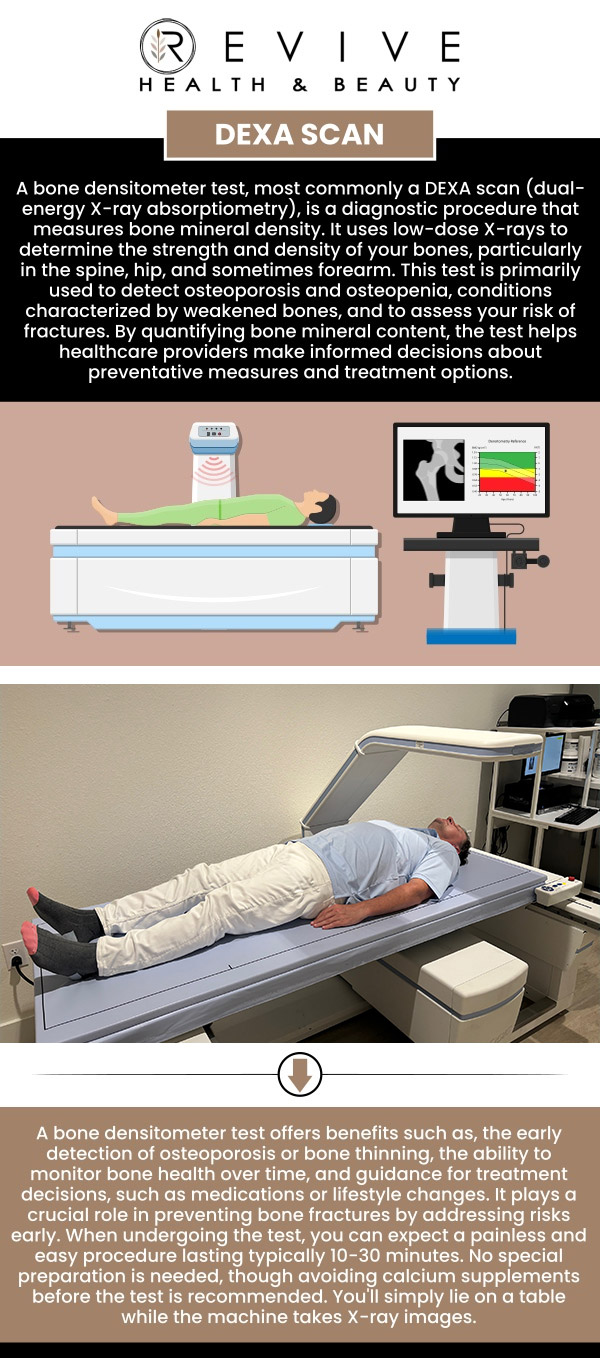
A DEXA (Dual‑Energy X‑ray Absorptiometry) scan is one of the most sensitive tools available for detecting early changes in bone density. Because it measures bone mineral content very precisely, it can reveal subtle decreases in bone strength before symptoms like pain or fractures occur.

Many people believe bone loss shows up only later in life or only after a break, but in reality, bone density begins to decline gradually years before problems are noticeable. DEXA testing can pick up this decline early, allowing your provider to:

• Identify early bone loss before it progresses to advanced osteoporosis.
• Assess trends over time when scans are repeated at intervals.
• Guide preventive care, such as targeted nutrition, lifestyle modifications, and medical interventions if needed.

At Revive Health and Beauty, the DEXA scan is part of a broader wellness toolkit that helps clients get a complete picture of their bone health. By detecting early loss, we can intervene sooner and support stronger bones as part of your long‑term health plan.

Do DEXA scan results vary between machines or facilities?


It’s possible for DEXA scan results to vary slightly between different machines or facilities — but good quality practices minimize these differences. Here’s why variation can occur:

• Different manufacturers and models use slightly different calibration standards.
• Positioning of the body during the scan can affect the measurement.
• Software versions used to interpret results can introduce minor variation.

However, when the machine is well‑maintained and the technologist is experienced, the differences are usually very small and clinically insignificant, especially when scans are done at the same facility over time.

At Revive Health and Beauty, the DEXA scan is performed on calibrated equipment by trained professionals who follow standardized protocols. This helps ensure consistency and accuracy, which is especially important if you plan to track your bone density over months or years.

If you ever need scans at different facilities (for travel or relocation, for example), your provider can help compare results appropriately and adjust for any expected variation.

Are there factors that can affect DEXA scan accuracy?


While DEXA is a highly accurate tool for measuring bone density, several factors can influence the results. Understanding these helps you and your provider interpret scans correctly and get the most value out of the information.
 
Common factors that can affect accuracy include:
 
1. Body Composition:
Excess soft tissue (fat or muscle) can sometimes affect readings, especially if body positioning isn’t ideal during the scan.
 
2. Metal or Implants:
Metal hardware (like hip replacements) in the scan field can interfere with bone measurements. Technologists are trained to adjust imaging and interpretation when metal is present to avoid misleading results.
 
3. Recent Contrast Scans:
Some advanced imaging studies use contrast dye, which may need to clear from the body before a DEXA scan to ensure accurate reading.
 
4. Positioning and Movement:
Because DEXA measures bone density precisely, even small shifts in body position during the scan can affect results. That’s why trained technicians emphasize consistent positioning.
 
5. Time Between Scans:
Bone changes slowly, so repeating a DEXA scan too soon (like within a few months) may not show meaningful change and can complicate interpretation.
 
At Revive Health and Beauty, careful attention to preparation, positioning, and scanning technique helps ensure that your DEXA results are as accurate and useful as possible for your health planning.

Can DEXA scans differentiate between bone loss causes?


A DEXA scan itself measures bone density — it does not diagnose the underlying cause of bone loss. However, the information from a DEXA scan is extremely valuable in helping your provider understand how severe the bone loss is and decide what further evaluation might be needed.

Here’s how DEXA fits into the broader bone health picture:

What DEXA can tell you:

• The degree of bone mineral loss (normal, low bone mass, or osteoporosis).
• Comparative scores that show how your bone density compares to healthy norms.
• Whether bone loss is progressing over time when scans are repeated.

What DEXA cannot do on its own:

• Identify why bone loss is happening (e.g., hormonal imbalance, nutritional deficiency, chronic condition, medication effects).
• Diagnose related metabolic or endocrine disorders.

To differentiate the cause of bone loss, providers consider DEXA results alongside:

• Medical history and risk factors (age, family history, medications, lifestyle).
• Blood tests to check calcium, vitamin D, hormone levels, and other markers of bone metabolism.
• Other imaging or clinical assessments if structural issues are suspected.

At Revive Health and Beauty, your provider uses the DEXA scan as a key component of a comprehensive assessment. The scan data is integrated with other health details to develop a personalized plan — whether the goal is prevention, strengthening, or managing a diagnosed bone condition.

The Importance of Accurate DEXA Scans for Bone Density Assessment at Revive Health and Beauty


At Revive Health and Beauty, we use highly accurate DEXA scans to assess bone density, providing reliable results for patients concerned about their bone health. DEXA scans are the gold standard in diagnosing conditions like osteoporosis, allowing our team to craft a treatment plan that includes dietary changes, exercise, and sometimes medication. By ensuring accurate results, we help you take proactive steps to prevent bone-related injuries. For more information, contact us or book an appointment online. We are conveniently located at 11500 State Highway 121, Suite 320, Frisco, TX 75035. We proudly serve clients from McKinney TX, Plano TX, Little Elm TX, Prosper TX, Celina TX, The Colony TX, Allen TX, and the surrounding areas.